Showing posts with label home. Show all posts

Sunday, February 4, 2018

Kwaheri (goodbye) and Asante Sana (thank you very much)!

Well, I'm back in the Seattle.  My time in Kijabe is over.  Jose is in Kenya now and for a few more weeks, so look for any posts from him!  I will miss my time there and hope to go back someday.  What an experience!  So much of it didn't make it on this blog.  I may post a few more of the interesting pathology cases we had later.

For my last post, I thought I would share some more daily life in the hospital and around Kenya.  While seeing the sights and adventuring is great, some of the greatest value in these sorts of experiences is just immersing yourself in the everyday life in a place half way around the world...

I'm so grateful for this opportunity to serve the people of Kenya at Kijabe Hospital!

Main patient entrance to Kijabe Hospital, also where we enter for work.

The children's hospital

Big cats stalking the parking lot

Medical records.  Massive files full of patient charts.  This is how it used to be in the U.S. before widespread adoption of electronic medical records.  Some hospitals still use paper charts in some capacity in the U.S!   As a pathologist, it makes a huge difference to have an electronic medical record to look up patient information quickly.  However, the doctors who saw the patients gave much better and more relevant clinical histories on pathology requisition sheets in Kijabe (in general) than in my experience in the U.S.

My patient's chart hadn't been filed yet, so the medical records team and I had to sort through the yet-to-be filed stack.

Home sweet home...

On one of our training hikes.  Beautiful Kijabe...

More from walking around.

Gardens

Driveway

Sunset from the Kijabe shopping street

Sunset from our balcony

Out to dinner with other volunteers at Mama Chiku's, one of about 2 local hole in the wall restaurants.  Very Kenyan food.

Cooling down chai at our favorite watering hole, Countryman Chai

This is chapati (flatbread) we made at home.  This one is sad that I have to leave...

My last day at the lab.  We had hospital catered food!  

I brought our staff some stroopwafels from Amsterdam.  These are waffle caramel sandwich cookies and are a Dutch favorite of mine.

Final pictures.

Everybody gets a soda on the house!  Except Rochelle, this Tab came all the way from Seattle.
A favorite storefront of mine down in the Rift Valley near Kijabe.
Saturday (market day) in a small, very rural village in the Great Rift Valley on the road from the Masai Mara back to Kijabe, where I will grab my stuff and head to the airport.  The poverty is evident.  This is rural Africa after all, and compared to this, Kijabe is actually relatively well off due to the economic developments that its hospitals and schools bring.  But the richness of color and the vibrancy of daily life are striking.  The challenges and disadvantages of getting by with less do not necessarily make people less happy.  I think Americans should have more first-hand experiences of how people live in much of the rest of the world.

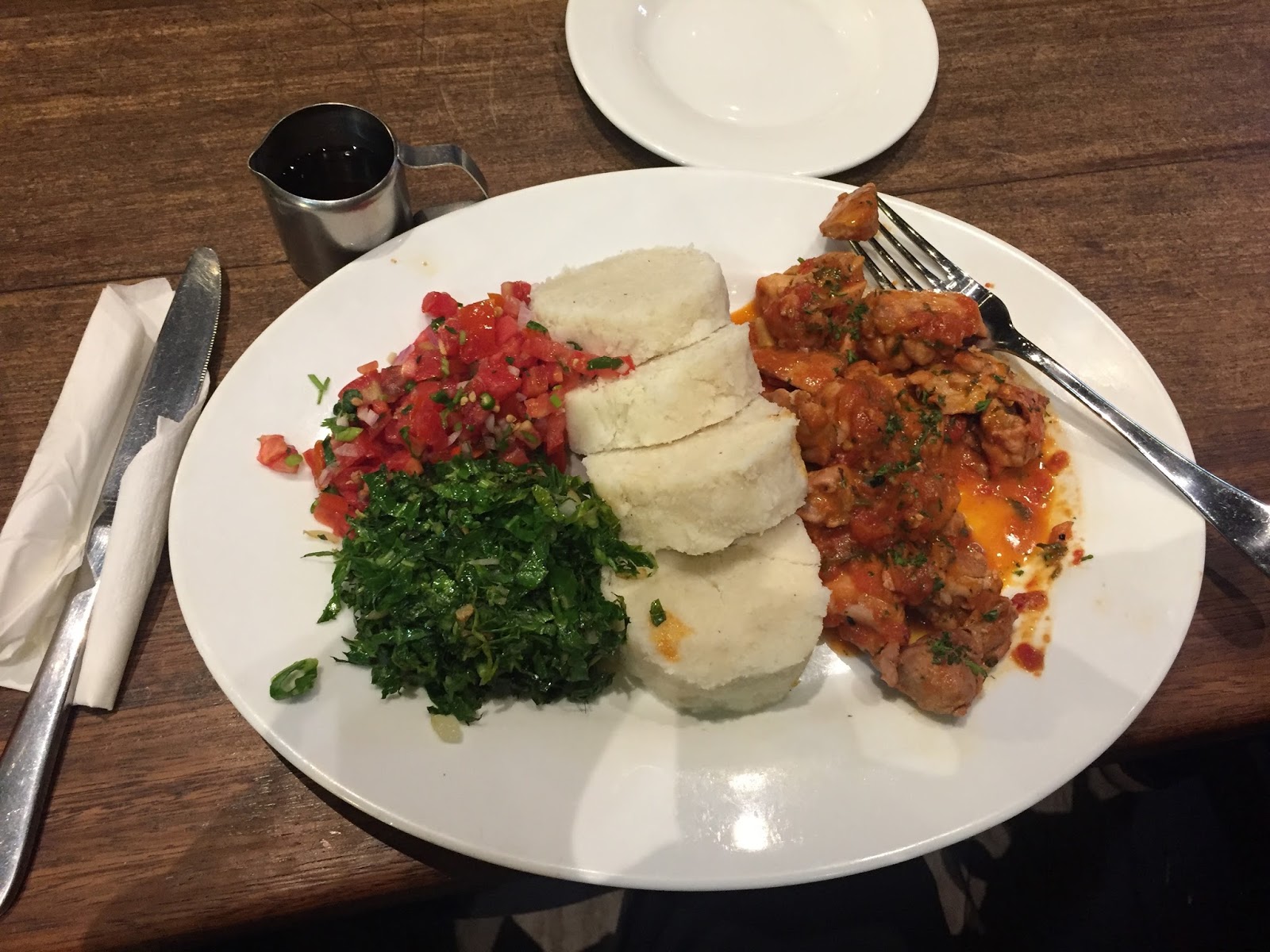
The most Kenyan food on the menu at the Nairobi airport Java House.  My last meal before taking off for home.

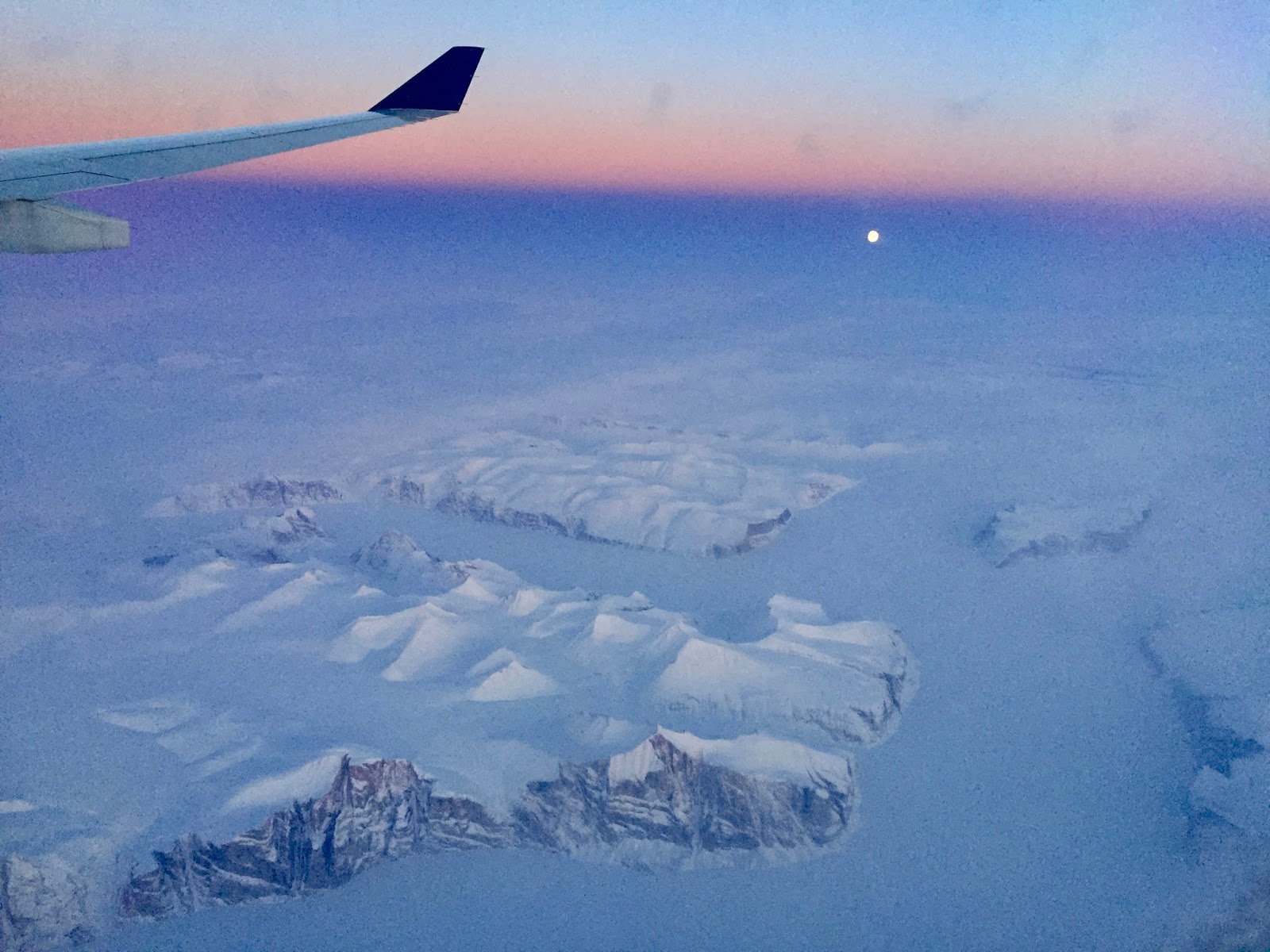
A peek at a wintry afternoon on Baffin Island with a full moon.

Tuesday, January 16, 2018

An introduction to Kijabe

I thought I would give a bit of context on the place we've called home for the last two weeks.

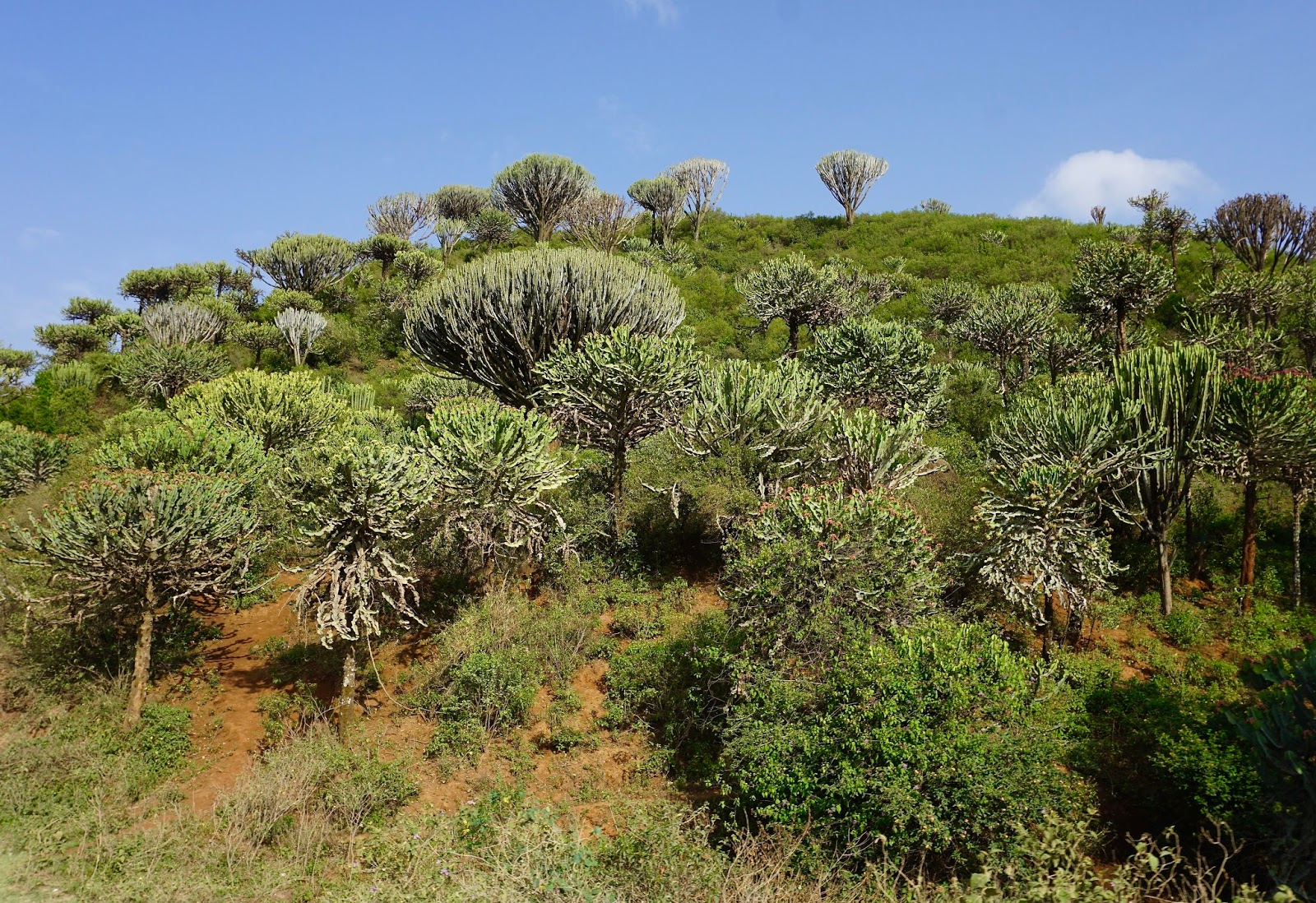
The hills below Kijabe descending into the Rift Valley become more arid.  Note that the big "trees" are cacti.
Kijabe is more of a campus than a town, centered around the AIC Kijabe Hospital, AIC-CURE International Children's Hospital of Kenya, Rift Valley Academy, and Moffatt Bible College.  It all started with the Rift Valley Academy, which was started in part by wealthy American patrons.  In fact, the cornerstone was laid by Teddy Roosevelt while he was in Safari in Kenya.  These institutions have created a community around them that is quite distinct from the surrounding area and "Kijabe Town" which is a small railroad stop located down in the Great Rift Valley below where the Kijabe Hospital sits higher up on the steep hills rising to the east of the valley.

On a hike through the countryside close to Kijabe
The main commercial part of the Kijabe community.  On the left is the Supa Duka or super market, middle is butcher shop, and right with the umbrella is Mama Chiku's one of the 3 local restaurants.
The main community of Kijabe is at an altitude of about 2200 meters, which puts it just above the Malaria zone.  Its lush surroundings are quite different from the arid lands at the bottom of the valley, and the climate is actually surprisingly cool.  Up above Kijabe, the highlands rise even higher, to about 2700 meters.  These are known as the Kijabe Hills or Kikuyu Escarpment, named for the local tribe, the Kikuyu.  We've hiked up to the top of them several times so far to prepare for ascending Mt. Kenya.   

At the top of the escarpment - are we in Kenya, or the Sound of Music?

We've had a fair bit of rain since we got here, which is unusual, as we are getting into the middle of the dry season.  Kijabe means "place of the wind," but it has been a little less windy than usual, so I'm told.

Rivulets of rain come down the road in front of the Sitaplex.  Ginger is covering herself with a white lab coat (we didn't bring rain coats because the day started out sunny and beautiful!) as she makes her way up the road
The view from our living room with the hospital among the trees, and the view of the Rift Valley obscured by rain.
We work in the pathology department of a large, >100 year old mission hospital.  The department sees about 3,100 surgical pathology cases per year.  We are the only pathologists at the moment, so we take care of all that come in while we're here.  Volunteer pathologists like us do what we can, but even on a good year, only 60-70% of the time is covered.

Histology.  Tissue processor in the right-hand corner.

Workspace.  Microscopes are covered.  Functional chairs:  optional.   Can of Tab:  MANDATORY.

Pathology is at the end of a busy hallway adjacent to the radiology suite and the clinical lab, and oh yeah, the urinal.  Oh well, at least we have some natural light.

Histotechs working on the day's slides.
One thing has been a clear and welcome difference from Seattle:  a slower and more laid-back pace of life.  While this requires patience for those of us who are accustomed to life in the US, going slowly and deliberately, or pole pole as they say in Swahili, is a way of life that leads to a palpable and infectious feeling of relaxed happiness.  I've been thoroughly enjoying myself  :)


This T shirt pretty much sums it up!

Sunday, January 14, 2018

Arrival in Kenya

We all flew in on the same flight.  Dr. David Thorning drove us to the airport, and we had a layover in Amsterdam Schiphol where we bought several kilos of Gouda cheese and some stroopwafels.  We then arrived in Nairobi, almost lost a Ukulele, and were on our way... to a night of hard sleep in the hotel.

Rochelle and Ginger at Nairobi Airport.  They don't travel light...  but there's a lot of important stuff in there, like 3000 tissue cassettes!

Nairobi was a quick shopping trip and lunch at a very posh and American-style bakery cafe.  I first met Philip, Rochelle's driver and close friend, and the fun begins...

Left to right:  Philip, Rochelle, Pink Water, Iced Tea That Looked Like Beer, Coca Cola, Ginger, Undisclosed Beverage, Thomas

After buying a huge amount of groceries at a Carefour store, now, we're ready to drive one of the "most deadly" highways in the world, winding through Kenya's central highlands, to Kijabe.  Spoiler alert:  we made it safe and sound, but saw some horrific driving and got to hear Philip complain about Kenyan drivers, showing that bad driving, and complaining about bad driving, are pastimes on the opposite side of the world as well. 

The glorious open living room window of our 3rd floor apartment
We arrived in the afternoon, 2 calendar days after we left.  Philip and I carried the 70 lb suitcases up to our 3rd floor "pathology penthouse" apartment in the Sitaplex building and discovered that there was no water.  Sawa sawa! We were happy to finally be in Kijabe.

Saturday, January 13, 2018

The much anticipated 2018 Kijabe blog! Better late than never.

To all of our friends and colleagues,

We blame the internet!  The Safaricom wireless routers that worked well in previous years have not this year, and despite trying just about every permutation of personal hotspots, hospital wifi, and using work computers, we've had some trouble doing most things on the internet, especially things like social media and pictures!

We have also lacked consistent access to running water due to local tank issues.  We almost had to move to another apartment because of that but ended up staying put in the pathology apartment.  And despite the fact we're in the dry season, the weather has been cool and often rainy rather than warm to hot and dry as I expected.  So as Rochelle and Ginger can attest, it's been a bit different this year!

But, there is some internet today, and our water seems to have been fixed yesterday (almost 2 weeks into being here).  Expect us to pack in a lot posts soon!  It's been a fantastic adventure, as usual despite the minor setbacks.

Cheers to another year in Kijabe.  Grab a Tab and follow our blog!
Water jugs and carboys filled with water  to help us get by!


Monday, January 23, 2017

Access to healthcare prevents deaths.


Cervical cancer (invasive carcinoma) is a mostly preventable disease, but only if people have access to regular health care. The use of Pap smear screening has already dramatically reduced the incidence of cervical carcinoma in countries with robust health care systems. The introduction of the HPV vaccine adds a second, extraordinary public health tool that promises to further reduce this form of cancer!  Sadly, despite these interventions there are a significant number of preventable deaths from cervical cancer.  

Today’s New York Times reported new estimates of deaths from cervical carcinoma (I’ve not been able to find a working link to the e-publication, but will post when available). The cited study, which excluded women with hysterectomies (and men), demonstrates mortality from cervical carcinoma at 4.7 per 100,000 white women and 10.1 per 100,000 for black women.  The study did not investigate the cause of the disparity, although previous work (also cited by the NYT and available here) indicates that deaths from advanced cervical cancer are associated with a lack of access to care, particularly for poor and non-white women.  

In Kenya, we’ve already seen quite a bit of invasive cervical carcinoma (see explanatory images and a discussion of “cancer” in this related post).  Kenyan women have limited access to routine screening with Pap smears, tend to present with more advanced disease, and have low survival compared to Western countries; these trends are associated with poverty and lack of access to care (Reference). Alarmingly, the death rate from cervical cancer for black women in the US (10.1 / 100,000 women) was comparable to that seen in low-income countries, just like Kenya.  Nicole is working on a similar project, tracking how the type and severities of cases we see in the Kijabe Hospital Pathology Department has changed overtime; she and Rochelle hope to compare these to a similar set of cases at our home institution.

This phenomena is not isolated to non-white women, or women in the developing world.  Poverty and lack of access to medical care are scourges that ignore color, race, and religion.  In some of the poorest areas of the US, in Appalachia, death rates from all forms of cancer are ~8% greater than the rest of the country (Reference).   The 13 states analyzed in this study, and their most Appalachian counties, were significantly more white (90.6% vs 71.8%), ~20% poorer, and had fewer high school graduates (22.2% vs 19.9%) than the non-Appalachian controls (37 states and the District of Columbia).  

I draw these distinctions because deaths from cancer cut across the lines that separate us: race, class, education, and language or nation of origin.  That said, poverty, living in rural areas, or otherwise lack of access to medical care puts people at higher risk of death.  Not just illness, but death.

Tuesday, January 10, 2017

What's a Pathologist, anyway?

This question may be old hat for some of you reading this blog, but friends and family might not have a clear idea of what we do and how we fit into medicine - in the US or Kenya.  So if you've ever wondered what we do, read on!

Pathologists are the physicians you never see in person.  We are diagnostic physicians.  Even if you don't see us, as pathologists we see essentially every patient (or something from every patient) in every hospital, doctor's office, and outpatient clinic.  We're behind the scenes, but every single specimen that comes from a patient - tissue, blood, snot, pus, urine, stool, you name it - makes it way to our labs.

We are trained like any other MD out there: medical school, residency (3-4 years), and usually fellowship (specialty/sub-specialty) training.  We make diagnoses by looking at tissue under the microscope (tens of millions of results annually in the US) and by providing laboratory values (billions of results annually in the US).  There is an oft-cited piece of pathology lore that states "70% of medical decisions" are based on these data - unfortunately, I can't find anything other than expert opinion to support this statement.

We tend to split ourselves into Anatomic Pathologists and Clinical Pathologists

  • Anatomic Pathology (AP) - AP is the branch of pathology that makes diagnoses by looking at tissue, both with the naked eye ("the gross examination") and under the microscope.  We look at biopsies (small bits of tissue to make an initial diagnosis) as well as big resections, like mastectomies. Our work defines the disease process (cancer vs not-cancer), whether the diseased tissue is out (margin status), and many other critical clinical questions.
    • Biopsies: If you've ever had a skin biopsy to rule out basal cell carcinoma, squamous cell carcinoma, melanoma, or to evaluate a rash, you've had a pathologist.  Similarly, if you've ever had a colonoscopy to look for "polyps" or inflammation, it's the pathologist who looks at those little biopsies to look for cancer ("neoplasia" is a better word) or other changes. 
    • Resections: When a piece of an organ or body site is removed, we make a series of determinations about disease type, extent of disease, severity of the changes, and perhaps most importantly: did the surgeons get it all?  
    • Intraoperative Consultation: An important role for the pathologist is to work with surgeons right in the middle of the surgery!  Surgeons will give us a sample of tissue and in 20min or less, we get back to them with information that changes the rest of their operation. Sometimes this is diagnostic ("is it cancer?"), sometimes the question is about extent ("did we get it all out"), and sometimes it's about whether more tissue needs to come out ("are lymph nodes involved").  
  • Clinical Pathology (CP) - CP is commonly referred to as "Laboratory Medicine" and is the practice of running ALL of the laboratories in the hospital, from Chemistry to Microbiology. We make sure that the results are accurate, reported quickly, and work with our clinical colleagues to help interpret what test results mean.  
    • Traditional Labs - these include chemistry, microbiology, immunology, virology, coagulation testing, and hematology.  In these labs, we make diagnoses of infectious diseases and what drugs can kill the infectious organism (or virus), why patients are bleeding, whether they have dangerous blood disorders such as Sickle Cell disease or thalassemias, how well the patient's liver or kidneys work, concentrations ("levels") of potentially toxic or life-saving drugs, and whether patient has taken any street drugs or toxic substances.
    • Transfusion Medicine and Blood Banking - running a blood bank is an art unto itself, requiring a range of laboratory testing ("blood typing" and testing for infectious disease are two important examples), blood collection, screening donors and donated products to make sure the donated product is safe, storage of blood products, as well as managing and preventing transfusion reactions.  
    • Clinical Informatics - informatics is the practice of making sure information flows appropriately, completely, and efficiently.  As Pathologists, we are uniquely poised to understand and improve how clinical information (test results, doctors notes, nursing records, etc) flow through the lab and the entire hospital system.  Clinical informatics is part of both AP and CP, although CP has a higher volume of results.
  • Hybrid Specialties that cross AP & CP - Not everything lumps nicely together.  
    • Hematopathology - Hematopathology is the diagnosis of leukemias, lymphomas, and other related disorders of blood cells and bone marrow.  We use a range of tools - microscopes, molecular testing (see below), flow cytometry, and clinical data to make these critical diagnoses.  Hematopathology has been an exciting, rapidly growing area of medicine and has included lots of technological innovation (like clinical use of flow cytometry).
    • Molecular Pathology & Genetics - the National Institute's of Health Human Genome Project was completed in 2003 with the publication of the first complete sequence of human DNA! The resulting data and the extraordinary technologies that arose from that effort still enormous potential to influence how we care for patients.  We routinely use the technology and insights from this basic science initiative in Molecular Pathology and Genetics.  We work closely with clinicians, including Genetic Counselors, to decide who needs genetic testing and what types.  We look for inherited conditions that place patients at risk for bleeding, infections, or cancer.  We look at cancers taken out of patients to look for driving mutations or genetic changes for which we have specific medications!
  • Research - many pathologists also do research.  This can range from basic science  to clinical/translational research to projects in epidemiology and public health.  I won't discuss this here, but as someone interested in basic science research I feel this deserves a shout out.       

Friday, January 6, 2017

Arrival! 2017


Week 1: Arrival in Kijabe

Our cast of characters for the 2017 rotation at Kijabe Hospital includes:
- Rochelle Garcia, Attending Physician, has come here every January since 2012.  Rochelle is a general surgical and cytopathologist; at home she specializes in GYN & Breast pathology.
- Josh Lieberman (Resident in Pathology & Lab Medicine) interested in infectious diseases, diagnostic medicine in hard-to-reach places, and microbial pathogenesis; this is his first trip to Africa!
- Ginger (Rochelle's Mom) - all-around helper and gross room assistant; she has accompanied Rochelle on each trip.
- Nicole Lieberman, at home she is a research scientist studying the immune response to pediatric brain tumors.  She joins the entourage as a photographer and is developing her own small project(s) on disease trends seen in the path lab at Kijabe Hospital. (She's also Josh's wife)

After long flights, we arrived in Nairobi late on 2 Jan 2017 and spent our first night at Amani Gardens
After buying groceries, we made it to Kijabe and introduced our newbies (Josh and Nicole) to the Pathology Lab.  Josh also checked out the Medical Labs and will be involved with a Microbiology validation project.  More updates to come soon!